A look inside the workbook
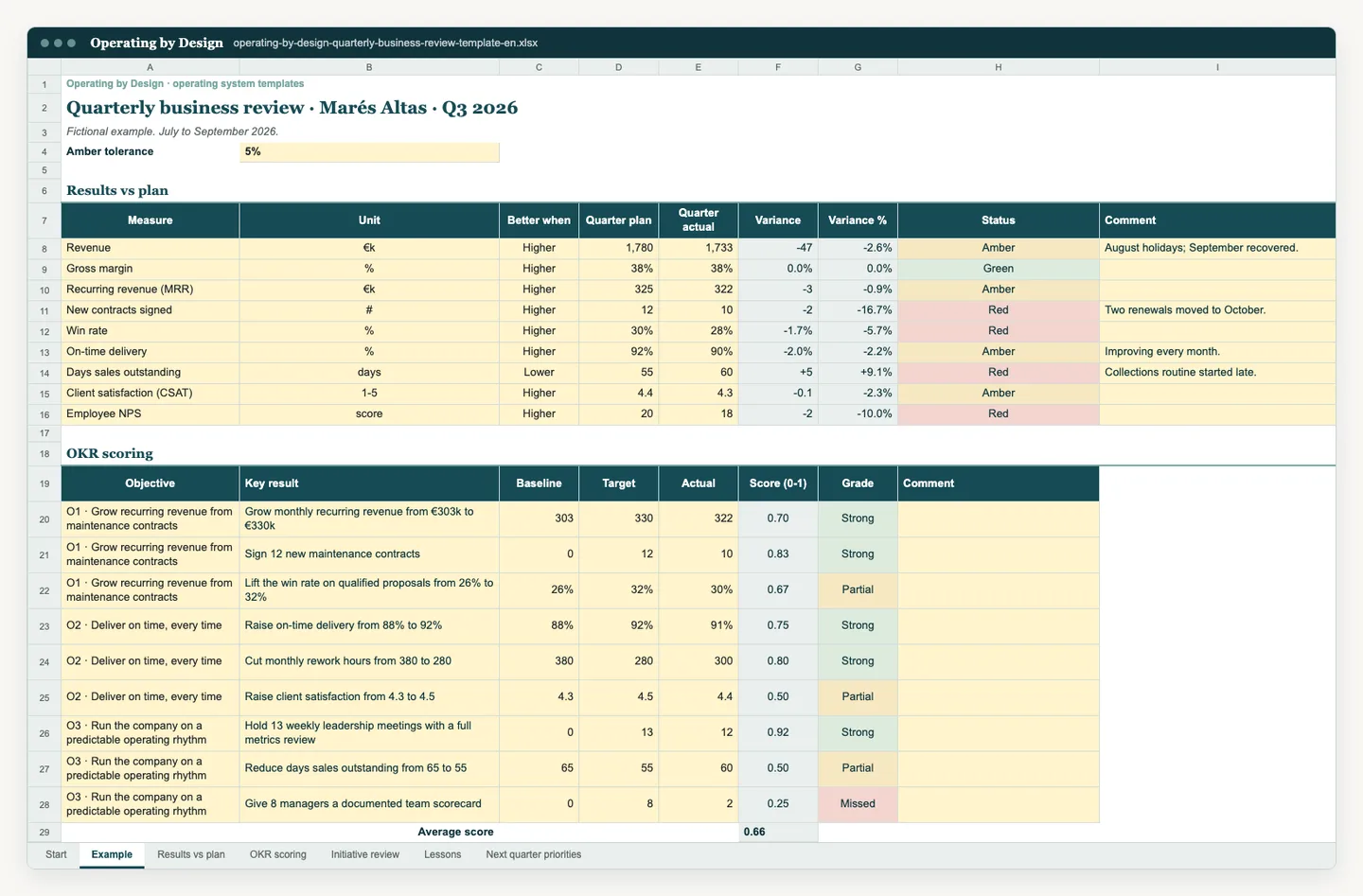
What it is and what it is for
The quarterly business review is where leadership assesses the quarter with enough distance to see patterns, not just monthly variances. The Excel template brings together results against plan, OKR scoring, the initiative review, lessons learned and next-quarter priorities. The PowerPoint slide outline follows the same sections, so the analysis can go to the leadership meeting, the board or investors.
Who uses it and when
CEOs, founders and leadership teams, and whoever prepares quarterly reporting for partners, boards or investors. Each area owner contributes results and lessons; one person consolidates the file and the deck.
Once a quarter, in the two weeks after the close. Prepare the Excel first and the deck second. Use the priorities agreed in the QBR as the starting point for next quarter’s planning.
How to use the template
- 1.Fill in the quarter’s results against plan from the close. Use the same indicators as the monthly reviews.
- 2.Score each OKR with the rule agreed at the start of the quarter and write one sentence on what explains the result.
- 3.Review initiatives: what was delivered, what slipped and what should stop. Stopping an initiative is also an outcome.
- 4.Record lessons in practical terms: what you will do differently next quarter.
- 5.Set three to five priorities for next quarter, each with an owner, and carry them into quarterly planning.
- 6.Move the key points into the PowerPoint outline, one slide per section, and send it before the meeting.
Data access and limitations
A QBR holds results, scores and sometimes information about people; agree who receives the Excel and who only receives the deck. Keep OKR scoring separate from individual performance reviews. The Marés Altas example is fictional and its results are not benchmarks. The files contain no macros.
Common questions
What should a quarterly business review include?
Results against plan, scoring of the quarter’s objectives, an initiative review, lessons learned and next-quarter priorities. Much more than that tends to turn the QBR into a report nobody reads.
Why does the template come in Excel and PowerPoint?
Excel is where the analysis happens and the history is kept. PowerPoint is the format for the leadership meeting, the board or investors, with the same sections so nothing is done twice.
How should OKRs be scored at quarter end?
Use the rule agreed at the start of the quarter and apply it to every key result in the same way. Scoring is for learning and better planning, not for rewarding or penalising people.
References and use
These are practical Operating by Design resources. Suggested cadences and quantities are starting points, not universal standards. References consulted on 16 October 2026:
Adapt the workbook for internal use in your organisation. Preserve the source attribution. Avoid unnecessary personal data.
From template to implementation
If the challenge needs more than a template, leadership alignment and a cadence that holds, see how we implement this with teams.
Explore the related service

