A look inside the workbook
What it is and what it is for
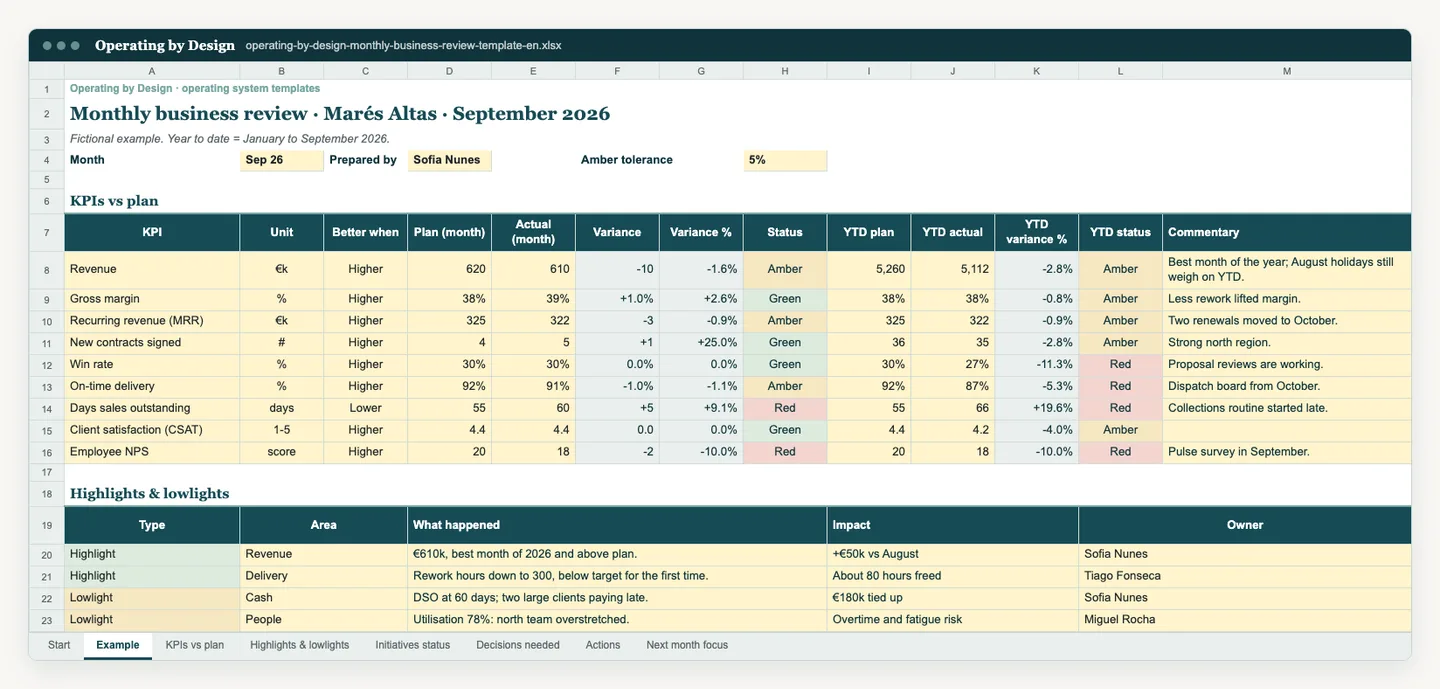
The monthly business review is the meeting where leadership looks at the closed month, compares results with the plan and decides what changes next month. The template brings together the KPI table against plan, the month’s highlights and lowlights, initiative status, decisions needed, actions and next month’s focus. It is prepared before the meeting, so time in the room is spent deciding.
Who uses it and when
CEOs, COOs, finance leads and leadership teams in growing companies. Each area prepares its part; whoever coordinates the meeting consolidates the file and sends it in advance. It can also serve as the basis for monthly reporting to partners or investors.
Once a month, five to ten working days after the close, when the numbers are stable. Send the completed file at least a day ahead and set aside ninety minutes to two hours for the meeting.
How to use the template
- 1.Right after the close, fill in the KPI table with the month’s actual and plan. Use the same definitions every month.
- 2.Ask each area for three highlights and three lowlights, with one sentence of explanation each. Facts, not narrative.
- 3.Update the status of ongoing initiatives and flag those that are late or at risk.
- 4.List the decisions leadership needs to make in the meeting, with the information needed to make them.
- 5.In the meeting, start with material variances and decisions. Log each action with an owner and a date.
- 6.Close with next month’s focus: two or three priorities that the whole leadership team can repeat.
Data access and limitations
The file contains financial and operational results; agree who receives it and avoid circulating versions outside the leadership team. Always compare with the plan and with history, not just the previous month, so you do not react to seasonal swings. The Marés Altas example is fictional and its figures are not benchmarks. The file contains no macros.
Common questions
How is the weekly meeting different from the monthly business review?
The weekly meeting resolves execution issues and keeps the pace. The monthly business review looks at the closed month, compares it with the plan and decides on course corrections.
Who should prepare the monthly business review?
Each area owner prepares their numbers and comments. One person, often from finance, operations or the chief of staff role, consolidates and sends the file before the meeting.
What if the month’s numbers are not closed yet?
Hold the meeting with the figures available and mark them as provisional rather than postponing it. Correct them the following month and note the difference.
References and use
These are practical Operating by Design resources. Suggested cadences and quantities are starting points, not universal standards. References consulted on 16 October 2026:
- Harvard Business Review · Mastering the Management System
- Harvard Business Review · Don’t Let Metrics Undermine Your Business
Adapt the workbook for internal use in your organisation. Preserve the source attribution. Avoid unnecessary personal data.
From template to implementation
If the challenge needs more than a template, leadership alignment and a cadence that holds, see how we implement this with teams.
Explore the related service

