A look inside the workbook
What it is and what it is for
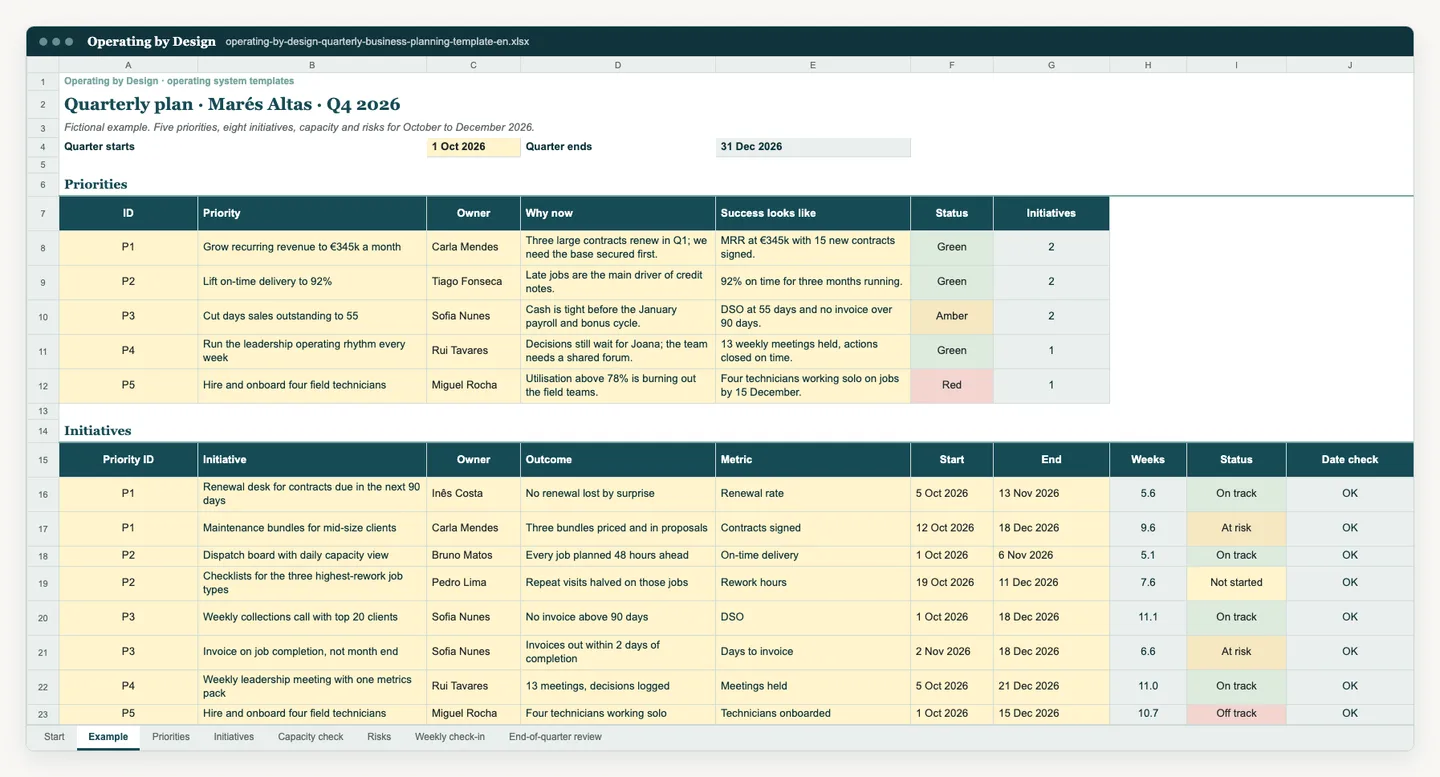
Quarterly planning turns the annual strategy into commitments that fit into thirteen weeks. The template starts with company priorities, links each initiative to an owner, an expected outcome and a metric, and asks for a capacity check before the plan is closed. During the quarter, the weekly log shows what is moving and what is blocked. At the end, the review closes the cycle and sets up the next one.
Who uses it and when
Founders, CEOs and leadership teams that want a simple, shared quarterly plan that is actually followed up. Each initiative has an owner in the leadership team or first line of management. The person who coordinates operations, or the chief of staff, prepares the planning session and keeps the weekly log.
Build the plan in the last two weeks of the previous quarter, in one or two leadership sessions. Hold a short weekly check-in and a full review at quarter end. If you run OKRs, use this plan for initiatives and the OKR template for outcomes.
How to use the template
- 1.Review the previous quarter and the annual strategy before opening the file. Start from what has changed, not from a blank sheet.
- 2.Choose up to five company priorities for the quarter. If everything is a priority, nothing is: note separately what you are deliberately leaving out.
- 3.For each priority, set out the initiatives with an owner, the outcome expected by quarter end and the metric that shows whether it worked.
- 4.Complete the capacity check with each team’s real available time. If the plan does not fit, cut or defer initiatives before you start.
- 5.List the main risks with an owner and a planned response, and set a fixed day for the weekly check-in.
- 6.At quarter end, complete the review: what was delivered, what was not, why, and what carries over into the next plan.
Data access and limitations
The plan is only useful if it is honest about capacity: an optimistic plan fails quietly halfway through the quarter. Keep a single shared version and agree who can change priorities once they are approved. The Marés Altas example is fictional and only shows how to fill in the template; do not use its figures as a reference. The file contains no macros.
Common questions
What is the difference between quarterly planning and OKRs?
OKRs define the outcomes you want to achieve. Quarterly planning organises the initiatives, owners and capacity needed to get there. They can live together or apart, according to how mature the company’s planning is.
How many priorities should a quarter have?
Few. Three to five company priorities are usually enough for a growing leadership team. Choosing what stays out matters as much as choosing what goes in.
What if the capacity check fails?
Reduce scope before you start: cut initiatives, split them into phases or move them to the next quarter. Adding work without removing any is the most common way to lose a quarter.
References and use
These are practical Operating by Design resources. Suggested cadences and quantities are starting points, not universal standards. References consulted on 16 October 2026:
- Harvard Business Review · Why Strategy Execution Unravels, and What to Do About It
- Google re:Work · Set goals with OKRs
Adapt the workbook for internal use in your organisation. Preserve the source attribution. Avoid unnecessary personal data.
From template to implementation
If the challenge needs more than a template, leadership alignment and a cadence that holds, see how we implement this with teams.
Explore the related service

